
Many people have asked this question — or simply never stopped to think about who or what the devil really is. Popular culture has given us a very vivid picture, but is it accurate? Today, we’re bringing more clarity on who the devil is and how he actually operates.
First, Let’s Clear Up the Myths
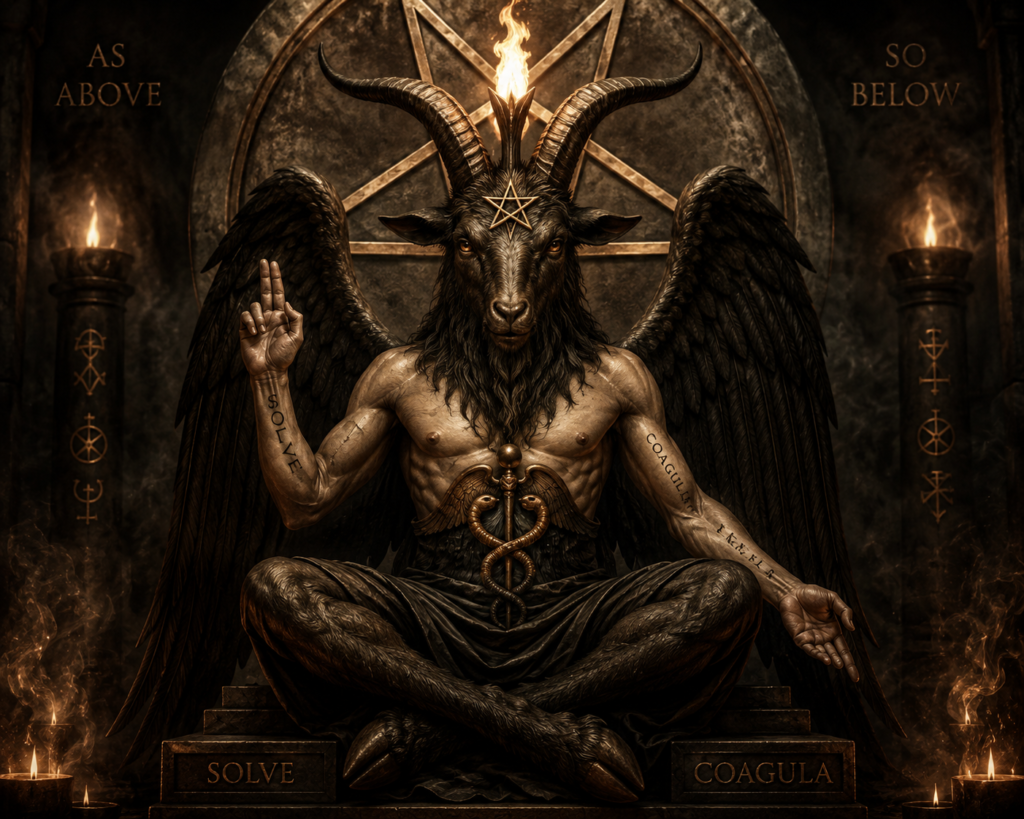
Before we can understand who the devil truly is, we need to release the image that movies, cartoons, and folklore have planted in our minds. The devil is not what popular pictures represent:
- The devil is not red or green-skinned. He does not have wings. He is not a creature living under the earth.
- He does not have horns and a tail, and he does not carry a powerful three-pronged fork.
- He does not live underground in the burning, melted rocks of the earth.
- He does not have powerful symbols like the five-pointed star. Symbols like this only carry “power” when control-loving people use them to make others afraid.
Once we set these images aside, we can actually look at what Scripture says.
Let’s Look at Lucifer — Who Is Lucifer?
Christians often refer to the devil as Lucifer, but the story behind that name is more nuanced than most realize.
He was called Lucifer only after the prophet Isaiah spoke a parable to the king of Babylon. Christians adopted the name Lucifer (used only once in the entire Bible) because that parable describes a heavenly being cast down from heaven to earth. Whatever his actual name was in heaven, we don’t know. But he was an angel of God — not “the devil” as we think of the title today.
He lost his place as an angel because he wanted to be higher than his brothers. He was cast down to earth, where he lived for a time in a body of flesh along with his fellow fallen angels. When he and these angels began to destroy the earth by interfering with God’s creation, God removed their bodies and left them as spirits without bodies. This condition is what we now call “Hell”: a state of existence without a body. So these fallen beings are now spirits, and they have remained spirits ever since.
This means Lucifer, by that name, does not exist anymore. Lucifer is not the real, current understanding of the devil.
If Lucifer really was his name, it was only his name back when he was an angel — a respected angel who fell and became “Satan”. The name “Lucifer” carries no power in itself. Treating it as a name to fear is, in a sense, a lie that keeps people living in fear.
Let’s Look at Satan — Who Is Satan?
The name Satan is actually an ancient Chaldean/Canaanite word meaning “adversary” or “enemy”.
It was not originally a proper name for the fallen angel we call Lucifer. Over time, it was adopted as his title because he became the “spirit of evil” and was known as the enemy of man. In those days, any enemy at all could be called “Shay-taan”.
The very first time the name “Satan” appears in the Bible is in 1 Chronicles 21:1:
“And Satan stood up against Israel, and provoked David to number Israel.”
So what is “Satan” actually referring to in this verse? This was David’s own pride after winning many wars — pride that made him want to number Israel. This nature within David acted as an enemy to the Spirit of God and to Israel. If it was purely “the devil’s fault,” why did David and the people of Israel have to suffer for it? A nature of pride in David caused David to fall. David yielded himself to a nature he was never meant to yield to.
Now let’s read Matthew 16:23:
“But he turned, and said unto Peter, Get thee behind me, Satan: thou art an offence unto me: for thou savourest not the things that be of God, but those that be of men.”
Who was Christ actually speaking to? Peter. Was Peter “Satan” — the fallen angel himself?
Peter was speaking something adversarial to Christ’s purpose; he was trying to prevent Christ from dying, and that was an adversarial act. Was Lucifer literally living inside Peter? No — but “Satan” was, in the sense that the nature of being adversarial to God’s word was present in Peter, even though Peter himself was ignorant of it.
The actual being of the devil was not in Peter, but some of the nature of the devil was — and that’s exactly what Christ pointed out. Even so, this doesn’t mean Peter was evil or secretly sinful. It simply means there was a flaw in his character that made him prone to that nature. We see this same tendency later, when Peter cuts off Malchus’s ear while trying to resist Christ’s arrest.
Being adversarial to the purpose of the Word is a lot more complex than simply being “an evil person”. So how, then, do we properly define the devil?
Spirit of Lies, Father of Lies, Lying Spirit
If God is the Spirit of Truth, then the only accurate way to identify the devil in this life is by the Spirit of Lies.
No honest person has ever seen the devil in his own “body”, because he doesn’t have one anymore. So we’re left attributing every negative consequence, bad fortune, and evil deed to a being we cannot see, hear, or touch — even blaming him for every sinful thing that overcomes us. But how could the devil affect us so much, and have so much power, that he could be everywhere at once, all over the world simultaneously — the same as God — and cause more manifestations in mankind than God Himself?
So the answer to “Who is the devil”? becomes clear: he is a liar, and the father — the beginner — of all lies. His first lie was told to Eve, and then he lied again through his son, Cain. In Cain’s case, it was serious — Cain actually believed he could lie to God.
The word “devil” itself means “false accuser” or “slanderer” — in other words, a liar. The English word “devil” comes from the Greek word diabolos, meaning false accuser or slanderer.
John 8:43-44 says:
“43 Why do ye not understand my speech? even because ye cannot hear my word. 44 Ye are of your father the devil, and the lusts of your father ye will do. He was a murderer from the beginning, and abode not in the truth, because there is no truth in him. When he speaketh a lie, he speaketh of his own: for he is a liar, and the father of it.”
Lying was identified as the work of the devil — and so he came to be called “the devil” (the liar) himself. But throughout the Bible, when the word “devil” is used, it actually means lying spirit. This is proven by another passage, John 7:19-20:
“19 Did not Moses give you the law, and yet none of you keepeth the law? Why go ye about to kill me? 20 The people answered and said, Thou hast a devil: who goeth about to kill thee?”
The Jews weren’t saying that Jesus had Lucifer inside him — they were saying he had a “lying spirit” on him. From Bible days, it was understood that a “devil” was the spirit of lies.
So, is the devil only “Lucifer”? No. But is Lucifer a devil? Yes — he was the beginner of lies, the beginner of devils.
Now, anything that tells lies, spreads lies, or projects lies is “the devil” being manifested, because it carries the very nature of deceit imprinted into mankind — a nature that traces back to the beginner of lies. Understanding this makes it far easier to identify the devil at work in our daily lives.
Two Spirits, Two Churches
Within the framework of the Christian church, there are two spirits — and, in effect, two churches. One is the True Church, led by the Spirit of Truth. The other is the false church, led by the spirit of lies.
- Who is God? The Spirit of Truth.
- Who is the devil? The spirit of lies.
Everything in this world operates on these two forces: truth and openness, or lies and deceit. A few everyday examples make this concrete:
- When an advert tells you to smoke, that’s the devil in action — the lie is that smoking is good for your body.
- When a politician tells you to hate a certain group of people, that’s the devil in action — lies being used to deceive you.
- When a preacher tells you there are three gods instead of One, that’s the devil in action — teaching a lie.
Demonology Starts With a Lie
Demonology always begins with a lie. It takes its stand on lies, and the stronger the lie, the stronger the demonology becomes. Even the practice of “casting out devils” without truth has become part of this same demonology — preaching lies while chasing after miracles.
But the truth shall set you free. As John 8:44 (KJV) puts it: “The devil abode not in the truth, neither is the truth in him.”
So the real questions for each of us become:
- Can you abide in Truth?
- Can Truth abide in you?
The Lord Himself said that we must abide in His Word, and His Word must abide in us — because the Word is truth. This is our only real guard against demonology today.